
Store something
A variable is a labelled box. Put a number, a name or a whole list inside it, then use the label instead of the value.
Semicolon is a coding school: tracks, practice, and projects. Ada is a real chat inside it — ask anything, paste broken code, and learn with follow-ups.
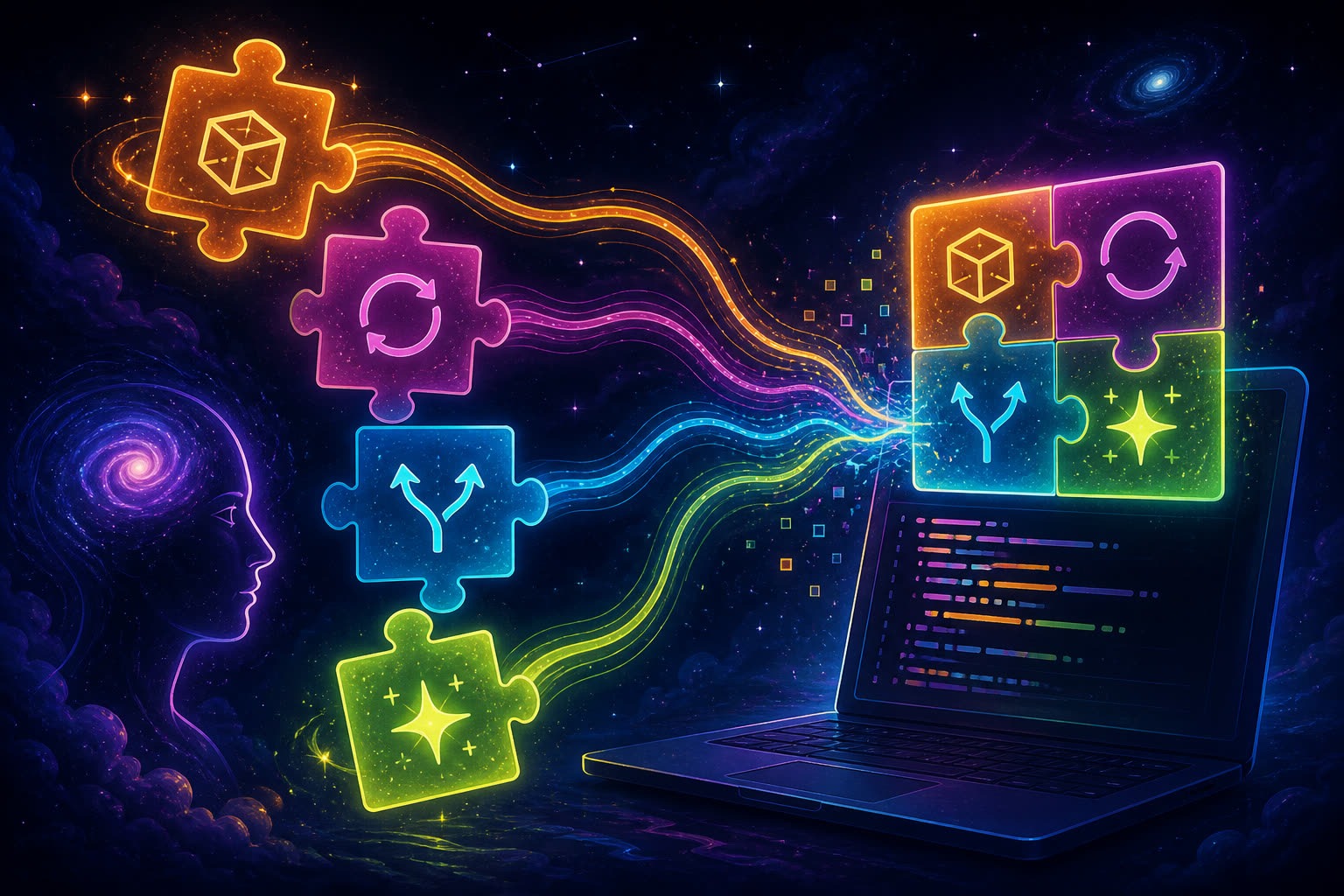
Almost everything in every language is built from these. Learn them once and they transfer to every language you ever touch.
A variable is a labelled box. Put a number, a name or a whole list inside it, then use the label instead of the value.
if and else. Do one thing when something's true and
another when it isn't. That's every choice a program ever makes.
A loop does the same job across a thousand items as easily as one. This is where computers stop being calculators and start being useful.
A function is a set of steps with a name. Write it once, use it anywhere, fix it in one place when it's wrong.
A computer does not “understand” English. It follows a short pipeline. Once you can picture that pipeline, errors stop looking like magic.
A .py or .js file is just text. The interesting part is that every character is a rule, including the spaces in Python.
Python’s interpreter (or a compiler, or the browser) turns that text into steps the machine can run. If a bracket is missing, it stops here and prints an error.
Add numbers, copy values in memory, jump to another instruction. Loops and if are just “do this again” and “skip that bit”.
Print to the terminal, paint a web page, write a file. If the result is wrong but there is no crash, the instructions were legal — and still not what you meant.
You do not need all of them. You need one that matches what you want to make.
Readable, useful the same day. Automation, data, scripts, learning the ideas. python hello.py runs the file.
HTML is structure. CSS is looks. JavaScript is the only language browsers run for decisions, clicks and live updates.
Not a language — a save-history for your project. Commit when something works. Write .gitignore first.
SQL asks questions of tables of data. C talks close to the machine. Add them when a project actually needs them.
Most programming isn't building the next big website. It's making a computer do a dull job so a person doesn't have to.
Renaming 400 photos, tidying a downloads folder, checking a website every hour. Twenty lines of Python can save you an afternoon every month.
Scientists, doctors and journalists use code to find patterns in numbers too big to read. Climate models and medical trials both run on it.
Websites, games, phone apps. The visible end of programming — and the part where you get to hand someone a link and watch them use it.
Robots, 3D printers, satellites, the traffic lights on your road. If it makes a decision without a human, something wrote the rules.
Security work is mostly reading code carefully and asking "what happens if someone does the unexpected thing here?"
Programming forces you to break vague problems into exact steps. That habit is useful long after you close the editor.
Each track is self-contained, free, and ends with something that works.
Short pieces on the things that trip people up early.
This site is new and has no users yet, so it has no reviews — and inventing some would be a poor start. Here are real quotes instead. Every one is sourced.